Colombia is the country with the greatest diversity of birds in the world — more than 1,900 recorded species. And an important part of this ornithological wealth is concentrated in the Colombian Amazon. The department of Amazonas is home to hundreds of species that do not exist anywhere else in the country, many of them difficult to find outside the Amazon rainforest.
Bird watching in the Colombian Amazon from Leticia is an experience that is not limited to specialized birdwatchers. Any traveler who leaves early on the river tours, who goes up to the Naipata Viewpoint in Puerto Nariño at dawn or who walks the jungle trails with open eyes will find birds that they have not seen in their entire life.
This guide presents you with the most iconic species, the best sighting points and tips to get the most out of the Amazon ornithological experience.
Table of Contents
- Why the Colombian Amazon is a Paradise for Birds
- The Santander Park Parrot Show
- Amazon Macaws
- Toucans: The Most Photogenic Bird
- Herons and Waterfowl of the Amazon River
- Amazon Birds of Prey
- Night Birds: Owls and Owls
- Kingfisher: The River Hunter
- The Best Sighting Points
- Best Times for Sighting
- What to Bring for Birdwatching in the Amazon
- Seasons and Sighting
- Frequently Asked Questions
Why the Colombian Amazon is a Paradise for Birds
The Colombian Amazon department concentrates extraordinary ornithological biodiversity for several reasons that are combined into a single ecosystem:
The Amazon rainforest as a habitat: The humid tropical jungle is the ecosystem with the greatest diversity of birds on the planet. Its vertical structure — from the ground to the treetops 40 meters high — creates multiple ecological niches where species that never interact with each other coexist.
The banks of the Amazon River: The contact zone between the jungle and the largest river in the world creates specific habitats for waterfowl, shore birds and birds that feed on the river's resources. The transition between the river and the jungle ecosystem multiplies diversity.
Flood-prone varzeas: In the rising season, when the lowland forest is flooded, temporary aquatic habitats appear that attract species that are not in the area in summer. The varzeas of the crescent are especially rich for migratory waterfowl.
The Triple Border: The point where Colombia, Brazil and Peru meet is also the point where the distribution areas of many species of the three countries overlap, increasing the total ornithological richness of the area.
The Santander Park Parrot Show
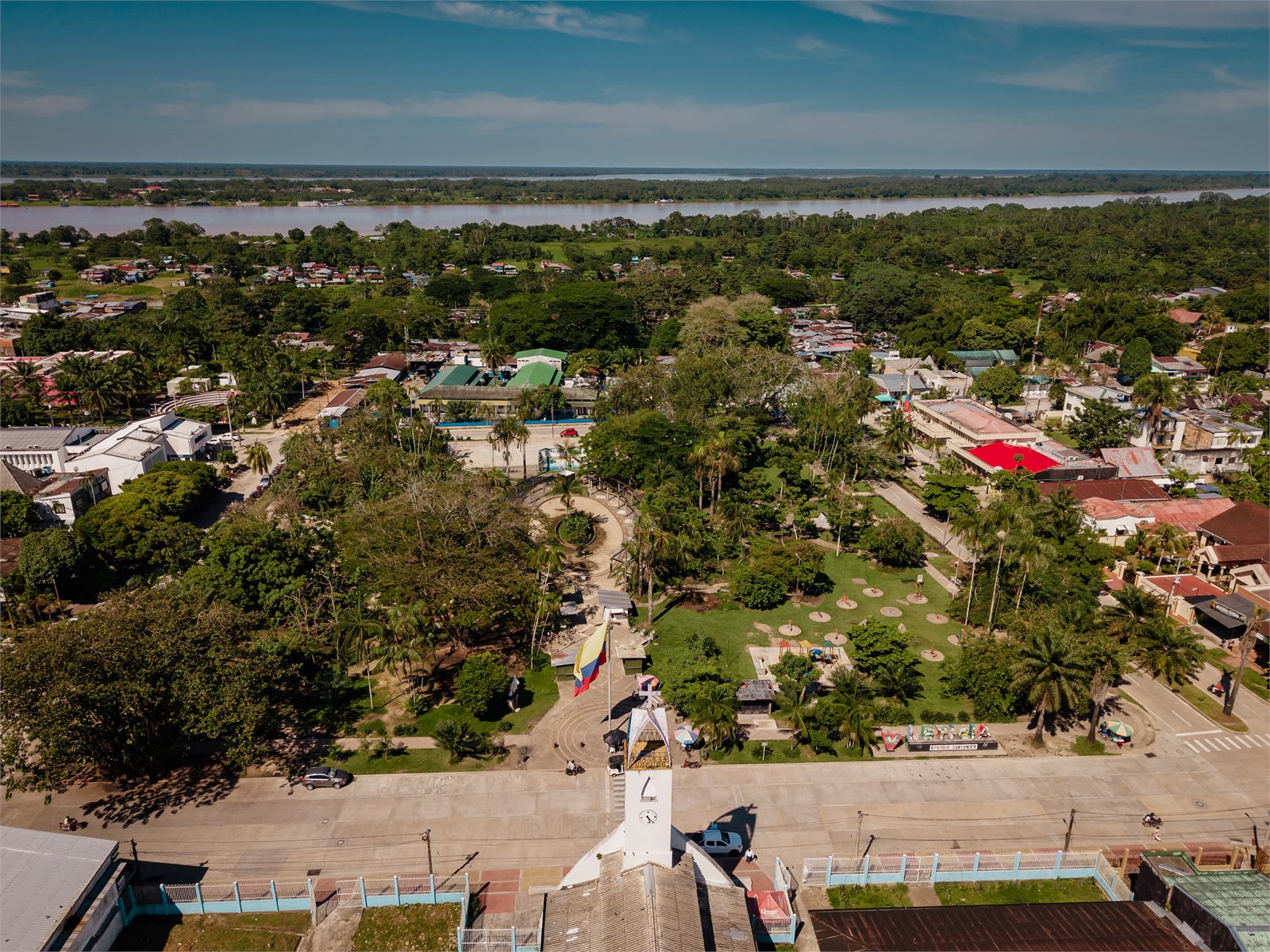
The most accessible and massive bird watching in the Colombian Amazon does not require getting up early, hiring a guide or leaving Leticia. It happens every day, punctually, in Parque Santander in the center of Leticia.
Around 5 p.m., thousands of Amazon parrots return from their feeding grounds to spend the night in the park's trees. The show lasts between 30 and 45 minutes: flocks of dozens to hundreds of parrots arrive in waves, fight for the best spots on the branches, create a deafening chorus of sound, and gradually calm down as darkness falls.
History: In the 40s-60s, a merchant in Leticia had parrots as pets. When the wildlife law came into force in the 1970s, he released his birds. The parrots found an ideal refuge in the trees of Santander Park, and generation after generation the colony grew to the current thousands of individuals.
*Tips for watching:*
- Arrive at the park at 4:30 pm to get a good point
- The first waves begin at approximately 4:45–5:00 p.m.
- The parrots arrive from the northwest — point the camera in that direction
- The sound at the peak of the show can be deafening — it's part of the experience
It's completely free. Every day of the year, without exception.
Amazon Macaws
Macaws are the most imposing and showy birds of the Colombian Amazon — their size, colors and flight are unmistakable even for non-bird experts.
* Scarlet macaw (Ara macao): * The most striking. Intense red with blue and yellow wings. It is frequently seen in small groups flying over the jungle and river banks.
* Green macaw (Ara chloropterus): * The largest of the Amazon macaws. Green with red on the wings, common in groups of 2 to 6 individuals.
* Blue and yellow macaw (Ara ararauna): * Bright blue on top, yellow on the belly. One of the most photographed because of the contrast of colors.
Macaws are most often seen in the early morning when they move to their feeding areas, and at dusk when they return. The river routes between Leticia and Puerto Nariño are good sighting points.
Toucans: The Most Photogenic Bird
Toucans are the bird most sought after by photographers and travelers who come to the Amazon. Their disproportionate beak and bright colors make them immediately recognizable and photogenically extraordinary.
* Multi-colored billed toucan (Ramphastos tucanus): * The largest and most common in the region. Black with white and yellow breast, multi-colored beak.
* Yellow-breasted toucan ( Ramphastos vitellinus ): * Intense yellow breast, blue and red beak.
Toucans: Several species of smaller toucans, equally colorful and common in the tops of Amazonian trees.
Where to see them: On jungle trails, especially in the early morning hours. Also in the treetops next to the river during river tours. Binoculars are essential for watching toucans — they are generally 15–30 meters high.
Herons and Waterfowl of the Amazon River
The banks of the Amazon River and its tributaries are the habitat of an extraordinary diversity of aquatic birds that river tours allow you to observe up close:
* Gray heron (Ardea cocoi): * The largest of the Amazon herons. Blue-gray with a black and white neck, up to 1.2 meters high. She is seen standing motionless on the banks of the river waiting for fish.
* Great white heron (Ardea alba): * Completely white, large in size. Frequent on the banks of rivers and lakes.
* Tricolor heron (Egretta tricolor): * Smaller, with a blue-gray back and a white and reddish belly.
* Amazonian kingfisher (Chloroceryle amazona): * Green with an orange breast. River hunter par excellence — his swooping flight over the water to catch fish is one of the most exciting moments of the river journey.
* Aninga (Anhinga anhinga): * The "snake bird" of the Amazon. It swims with its body completely submerged, leaving only its long neck and head above the water — hence its nickname. He is often seen spreading his wings to dry them in the sun on the branches over the river.
* Jabirú (Jabiru mycteria): * The largest stork in America, up to 1.5 meters high. White with a black and red head and neck. Rare but spectacular when it appears.
Amazon Birds of Prey
The Colombian Amazon has an important diversity of birds of prey — from small falcons that hunt insects to large eagles that dominate the jungle canopy.
* Harpy Eagle (Harpia harpyja): * The largest and most powerful raptor in America. Their populations are scarce and sightings are not frequent, but the Colombian Amazon department is one of the last refuges of the species in the country.
* King Hen (Sarcoramphus papa): * Brightly colored vulture — white with black, red, orange and yellow on the bald head. It is seen in open areas and on the river.
* Laughing falcon (Herpetotheres cachinnans): * Its song is one of the most characteristic of the Amazon rainforest — a high-pitched, repeated laugh that the guides immediately identify. It is seen on the edges of the forest and the banks of the river.
Night Birds: Owls and Owls
The night safari in the Amazon is also an opportunity for nocturnal birds that are practically invisible during the day:
* Striated Owl (Rhinoptynx clamator): * One of the most common Amazonian owls. Their song at night is one of the sound references of the dark jungle.
* Barn Owl (Tyto alba): * Present throughout the region, most visible in semi-open areas and edges of the jungle.
* Large nictibius ( Nyctibius grandis ): * Master of camouflage — during the day it looks like a piece of a dead tree. At night it flies silently hunting large insects.
Kingfisher: The River Hunter
The kingfisher deserves special mention because it is the bird that most frequently surprises travelers during river tours. Their dive straight over the water to catch a fish — with extraordinary precision — is one of the most exciting moments of a boat tour.
In the Amazon there are several species, the Amazonian kingfisher and the green kingfisher being the most common. They are seen perched on branches above the water, motionless, observing the movement of the fish below the surface before the attack.
The Best Sighting Points
Santander Park (Leticia): The parrots at 5 pm. Essential, free, spectacular.
Amazon River (Leticia–Puerto Nariño river tour): The banks of the river during the boat tour. Herons, kingfishers, aninga, buzzards, occasionally macaws flying overhead.
Yahuarcaca Lagoon System: Especially rich in waterfowl. In flood, when the varzeas are flooded, the concentration of species is greater.
Lake Tarapoto (Puerto Nariño): Water and jungle birds around the lake. In the early hours of the morning.
Naipata Viewpoint (Puerto Nariño): Trail and viewpoint with excellent visibility towards the treetops. At dawn is the best time — toucans, parrots and macaws active.
Jungle trails (on dry land): Trails in the operation area offer the most varied viewing — from the ground to the canopy, with guides identifying species by song.
Best Times for Sighting
5:30–9:00 am (dawn and early hours): The time of greatest activity for the vast majority of Amazonian birds. The temperature is cool, the light is good for photography and the birds are at peak feeding activity.
5:00–6:30 pm (sunset): The return of parrots to Santander Park, the movement of macaws to their roosts, and the transition to nocturnal birds.
Night safari (7–10 pm): For nocturnal species — owls, nictibians, some nocturnal raptors.
Noon: The time of least activity. Most birds seek shade during the hottest hours. It is not the best time for birdwatching.
What to Bring for Birdwatching in the Amazon
Binoculars: The most important item for birdwatching. Amazonian birds are often 15–30 meters high in the canopy — without binoculars many observations are just silhouettes. An 8x42 binocular is the recommended standard for this type of sighting.
Bird guide: Field guides specialized in birds from Colombia or the Amazon are very useful for identifying species. There are digital versions in apps such as eBird, Merlin Bird ID and Colombia Birds.
Powerful zoom camera: To photograph birds from a distance. Telephoto lenses of 300mm or more are ideal, but you can also get good photos with the zoom modes of modern phones.
Clothing in neutral colors: Earth colors, green or gray. Bright colors alert birds. In the Amazon, repellent is more important than camouflage, but avoiding reds and oranges is recommended.
Bird song app: Cornell Lab's Merlin Bird ID and eBird have song recordings to identify birds by sound — especially useful in the jungle where seeing birds is difficult but hearing them is constant.
Seasons and Sighting
*Summer season (June–November):*
- Better visibility on the river banks (less dense vegetation)
- More waterfowl concentrated in the main channels
- Brightest light for photography
*Increasing season (December–May):*
- Flooded varzeas attract a greater diversity of aquatic and migratory birds
- Sighting by kayak through the channels between the trees allows you to get closer
- Cloudier — worse lighting conditions for photography
Frequently Asked Questions
How many species of birds can be seen in the Colombian Amazon? The Colombian Amazon department has more than 600 species of birds registered. On a 4–5 day tour, an attentive observer with a specialized guide can record between 80 and 150 species.
Does the parrot show in Santander Park happen every day? Yes, every day of the year, regardless of the season. The parrots arrive around 5 pm and the show lasts between 30 and 45 minutes. It's free.
Can you see macaws in the wild from Leticia? Yes. Scarlet, green and blue-yellow macaws are frequent in flights over the jungle and river. River routes are the best sighting points, especially in the early morning hours.
Is it necessary to hire a specialized bird guide for birdwatching in the Amazon? It is not strictly necessary — many birds are seen during regular tours. However, a guide specialized in Amazonian ornithology can multiply the number of species sighted, especially the most cryptic or difficult to identify.
What is the best month for birdwatching in the Colombian Amazon? Birdwatching is excellent all year round. In terms of light and visibility conditions, June–October (dry season) is slightly better. In terms of diversity in birds associated with flooded varzeas, January–May has specific advantages.
Our tours include bird watching on river tours and jungle walks. [leticia.travel](https://leticia.travel)
Plan your Amazon trip
We help you choose the best combination of days, activities and season based on what you want to experience in Leticia, Puerto Nariño and the triple frontier.