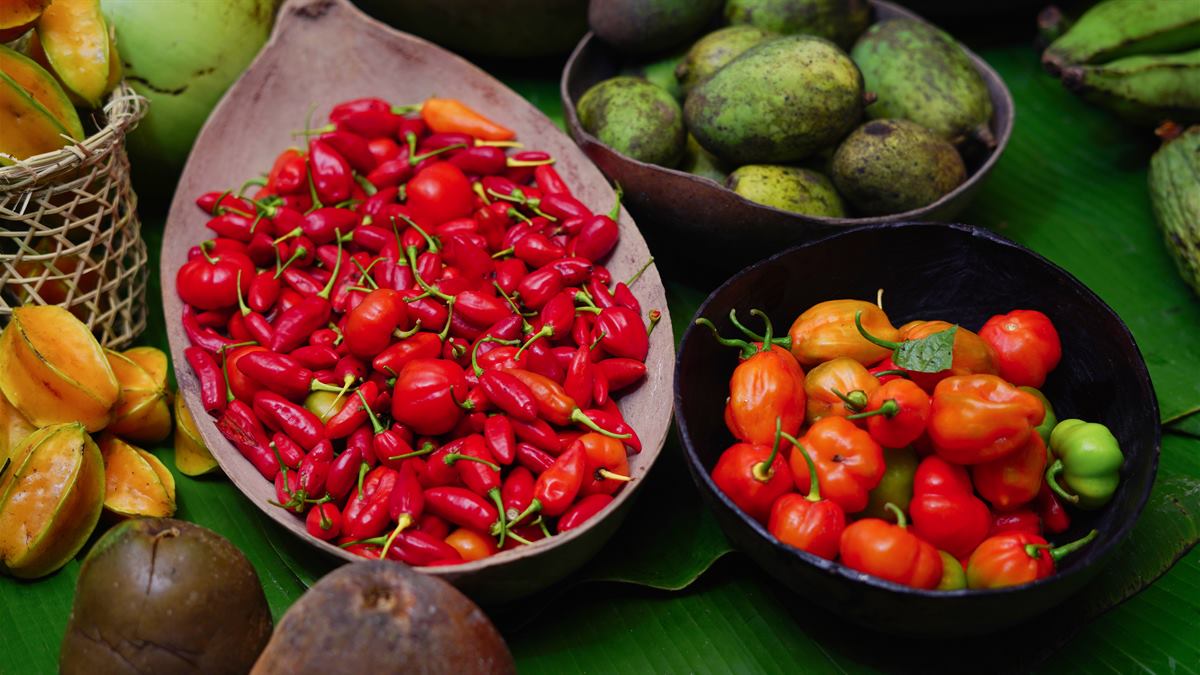
The gastronomy of the Amazon is one of the great discoveries of the trip — and one of the least anticipated. Nobody goes to Leticia thinking mainly about food. But almost everyone comes back talking about her.
Bocachico broth at 6 in the morning in the Market Square. The freshly made yucca beiju on 8th Street. The charcoal tambaqui in Tabatinga. The river ceviche in Santa Rosa. The smoking patarasca taken directly from the embers in the indigenous community. Each preparation tells a story of the jungle, the river and the people who have spent centuries learning to feed on one of the richest ecosystems on the planet.
The Ingredients That Define Amazonian Cuisine
The cuisine of the Colombian Amazon is built with what the river and the jungle offer directly — not with what arrives by truck from another region. Fishermen who go out to the Amazon before dawn, farmers who grow cassava and bananas on the shores, collectors who know every fruit tree in the jungle.
This direct dependence on the environment gives Amazonian gastronomy an irreproducible authenticity. It is not a culinary style that can be transferred to another city. It works here, with these ingredients, in this context.
The Fish of the Amazon River
Fish is the center of Amazonian cuisine. Not the chicken, not the beef. The fish from the river.
Gamitana / Cachama (*Colossoma macropomum*): The queen. Wide body, fatty and tasty meat. The most versatile for all types of preparation. In Brazil it is called tambaqui; in Peru, also gamitana.
Pirarucú / Paiche (*Arapaima gigas*): One of the largest freshwater fish in the world. White, firm and soft flesh. Fried, roasted or in broth.
Bocachico: Scaled fish, ideal for broths. Protagonist of the most authentic breakfast in Leticia.
Cucha: Without scales, deep, intense flavor. Cucha broths are the most local breakfast of all in the Market Square.
Shad: Silver, appreciated for grilling over charcoal. Along with the gamitana, it is the most common in Leticia restaurants.
Piranhas: Small, spiny, but with a surprising flavor when roasted whole. Few travelers dare; almost everyone is glad they did it.
La Yuca Brava: The Soul of Indigenous Cuisine
If fish is the protein, cassava brava (*Manihot esculenta*) is the soul. It contains natural toxic compounds that indigenous peoples learned to eliminate millennia ago with processing techniques that are still in force.
Fariña: Toasted, granulated, slightly acidic flour. Universal accompaniment to fish and broths. The manufacturing process — peeling, grating, juicing to remove toxins, roasting — is fascinating to watch.
Casabe: Flat, crispy bread baked on hot stones. Direct inheritance of pre-Columbian cuisine.
Starch: Base of beiju, the most characteristic street preparation of Leticia.
Gamitana Asada: The Dish of the Day by Day
The most representative dish of Leticia's daily cuisine is not the stuffed gamitana — it is the charcoal-roasted gamitana. Or the tarpon. Directly on the embers, with coarse salt and lemon, accompanied by yucca, patacones and fariña.
It is what is eaten in the neighborhood restaurants, in the market stalls, in the homes of the families of Leticia. No reservation or special preparation required. It is everyday food and in that simplicity lies all its greatness.
Gamitana Stuffed: The Festive Plate
The stuffed gamitana is the most iconic dish of Colombian Amazonian cuisine — not the most frequent, but the most important in cultural and gastronomic terms.
A whole gamitana of 6 to 10 kilos is opened, filled with cooked rice, vegetables (beans, carrots, onion, paprika), olives and Amazonian spices including wild cilantro. It is sewn, seasoned on the outside and baked for about two hours. An 8 kilo piece yields between 20 and 30 servings.
Chef Panduro popularized this dish nationwide from Tabatinga. In Leticia, the reference place is the Los Kilómetros Restaurant by Jhon Jairo Cano, on the only land route that leaves the city. Made to order — call ahead.
Beiju de Yuca: The Indigenous Snack of Calle 8
Beiju is one of the preparations that travelers discover by accident and include among their favorites on the trip.
Crispy bread made with cassava starch poured onto a hot griddle. It is roasted until it acquires a texture between crunchy and chewy. It is folded in the middle with a filling of meats, cheeses or local ingredients. Hot, cheap and extraordinarily good.
The most famous stand in Leticia: on the corner of the DroguerÃa Gloria, Calle 8. Direct inheritance from pre-Columbian indigenous culture — techniques that have not changed in centuries.
Patarasca: Ancestral Technique
The patarasca is a technique before it is a recipe. A river fish — generally catfish, bocachico or gamitana — is marinated with jungle spices (wild coriander, chili, lemon), completely wrapped in bijao or banana leaves, and placed directly on the embers.
The leaf seals in juices, aromas and moisture during cooking. When you open the package, the vapor that escapes smells like a river and jungle. The meat is perfectly cooked, juicy, with the spices integrated into each fiber.
In Puerto Nariño, catfish patarasca is a specialty that some families and restaurants prepare with mastery inherited from generations.
Breakfast in the Market Square of Leticia
The Market Square is the gastronomic heart of Leticia and the best place to have breakfast like the local people do. From 5 am:
Bocachico broth: Clear broth, with pieces of fish, cassava, banana and wild cilantro. The fisherman's breakfast.
Cucha broth: Darker and stronger. The favorite of those who really know local cuisine.
Gamitana broth: The natural fat of cachama gives it a unique texture and flavor.
Along with the broths: fried pirarucu, patacones, fresh Amazonian fruits, artisanal fariña.
Arrive before 8 am. The best positions sell out early.
Gastronomy in Tabatinga Brazil
A 10-minute walk from Leticia, Tabatinga opens another gastronomic chapter:
Tambaqui al charcoal: The star dish. The same gamitana prepared on the embers with the Brazilian technique. Crispy skin, juicy meat, with rice, beans and fariña. Essential.
Espetinhos (charcoal skewers): Meat or chicken at street stalls at any time.
Fried Pirarucú: Brazilian-style paiche, with fariña and rice.
Amazonian chocolates: Artisan bars with local cocoa, copoazú and camu camu. Gastronomic souvenir that almost no one knows about.
Chef Panduro Restaurant: The creator of the stuffed gamitana has his reference restaurant here.
Gastronomy in Santa Rosa Peru
A 5–10 minute boat ride from Leticia, Santa Rosa offers authentic Peruvian-Amazonian cuisine:
River ceviche: Amazonian fish (pirarucú, dorado, gamitana) in lemon, red onion, chili and cilantro. Different from Lima ceviche but equally brilliant.
Tacacho with cured meat: Mashed green banana with butter and smoked pork.
Juane: Rice with spices in bijao leaf. Amazonian-Peruvian festive dish.
Chicha Morada: Purple corn drink with spices. The most representative of Peruvian cuisine. Perfect for the Amazonian heat.
Brisas del Amazonas Restaurant: The gastronomic reference point on the Peruvian side.
Amazonian Fruits You Should Try
Copoazú: Cousin of cocoa. In juice it is creamy, acid-sweet, with an aroma that does not exist anywhere else. In artisanal chocolate it is irresistible.
Arazá: Intense yellow, very acidic flavor, powerful aroma. One of the most refreshing juices from the Amazon.
Natural açaÃ: Completely different from the industrialized one. Dark, dense purple pulp, earthy flavor. With fariña or sugar, as the riverside communities eat it.
Aguaje: Amazonian palm with scaly red fruit and buttery orange pulp. In artisanal ice cream it is extraordinary.
Camu camu: The highest concentration of vitamin C of any known fruit. Very acidic flavor; In mixtures with other fruits it is exceptional.
Look for them in the Market Square and in the artisanal ice cream parlor next to Santander Park.
Drinks from the Amazon
Masato: Ceremonial drink of the indigenous Amazonian peoples, made with cooked and fermented cassava. Variable flavor — soft and sweet or more acidic depending on the fermentation time. It is offered during visits to Tikuna and Huitoto communities as a gesture of hospitality.
Chicha Morada: Peruvian purple corn drink with spices and fruits. Present in Santa Rosa and restaurants with Peruvian influence in Leticia.
Amazonian fruit juices: Copoazú, arazá, camu camu, açaÃ. The best with fresh fruit from that day at the market stalls.
Colombian coffee: Leticia is not a coffee region but the coffee arrives. Morning coffee overlooking the river has its own Amazonian ritual.
The Best Restaurants and Gastronomic Points
In Leticia:
| Place | Specialty | Hours |
|---|---|---|
| Market Square | Broths, fried fish, fruits | From 5 am |
| Los Kilómetros Restaurant (Jhon Jairo Cano) | Stuffed Gamitana (on request) | Call beforehand |
| Beiju Calle 8 (DroguerÃa Gloria) | Stuffed cassava beiju | Mid-morning and afternoon |
| Calle del Humo | Grilled meats and fish ember | Nights |
| Parque Santander Ice Cream Shop | Amazonian fruit ice cream | Afternoon |
In Puerto Nariño:
| Place | Specialty |
|---|---|
| Las Margaritas Restaurant | Lunch during the tour |
In Tabatinga (Brazil):
| Place | Specialty |
|---|---|
| Chef Panduro Restaurant | Stuffed Gamitana |
| Municipal Market | Fresh fish, fruits |
In Santa Rosa (Peru):
| Place | Specialty |
|---|---|
| Brisas del Amazonas Restaurant | Peruvian-Amazonian gastronomy |
Gastronomy in Indigenous Communities
In the Tikuna and Huitoto communities that we visit on our tours, travelers have the opportunity to try preparations that do not have a menu or menu:
- Patarasca freshly taken from the embers, prepared by the families
- Artisan fariña made that same day
- Casabe baked on hot stones
- Wild fruits picked that day
- Masato offered as a gesture of hospitality
To access these experiences: 3, 4 or 5 day tours on leticia.travel.
Practical Tips
Bottled water only: Tap water in Leticia is not drinkable.
The Market Square, early: The best stalls sell out before 8 am.
Gamitana filled in advance: Call Los Kilómetros Restaurant before you go — it is made to order.
In communities, accept what they offer: If they offer you masato or casabe, accept it with respect — it is a genuine gesture of hospitality.
Local currency in Tabatinga and Santa Rosa: Reales and soles give a better rate than pesos in local markets.
Frequently Asked Questions
What is the most typical dish of the gastronomy of Leticia Amazonas? The daily dish is charcoal-roasted fish — gamitana or sábalo. Stuffed gamitana is the most iconic festive dish, but it is made to order and is not always available.
Where to have an authentic breakfast in Leticia Amazonas? In the Market Square from 5 am — bocachico, cucha or gamitana broths, fried pirarucu, fariña and Amazonian fruits. Before 8 am for the best positions.
What is beiju and where to find it? Crispy cassava starch bread filled with meat or cheese. The most famous stand in Leticia is on the corner of the Gloria Drugstore, 8th Street.
What are the essential Amazonian fruits? Copoazú (in juice or chocolate), arazá (in juice), natural açaà and aguaje (in artisanal ice cream). In the Market Square and the Santander Park ice cream parlor.
What is masato and how is it different from chicha? Masato is an indigenous Amazonian ceremonial drink made with cooked and fermented cassava — not corn like chicha in other Colombian regions.
*To experience Amazonian gastronomy in a complete tour: leticia.travel*
Do you want to experience the Amazon with a clear route?
Write to us on WhatsApp and we will help you choose between a 2, 3 or 4-day tour depending on your flight, season and travel style.