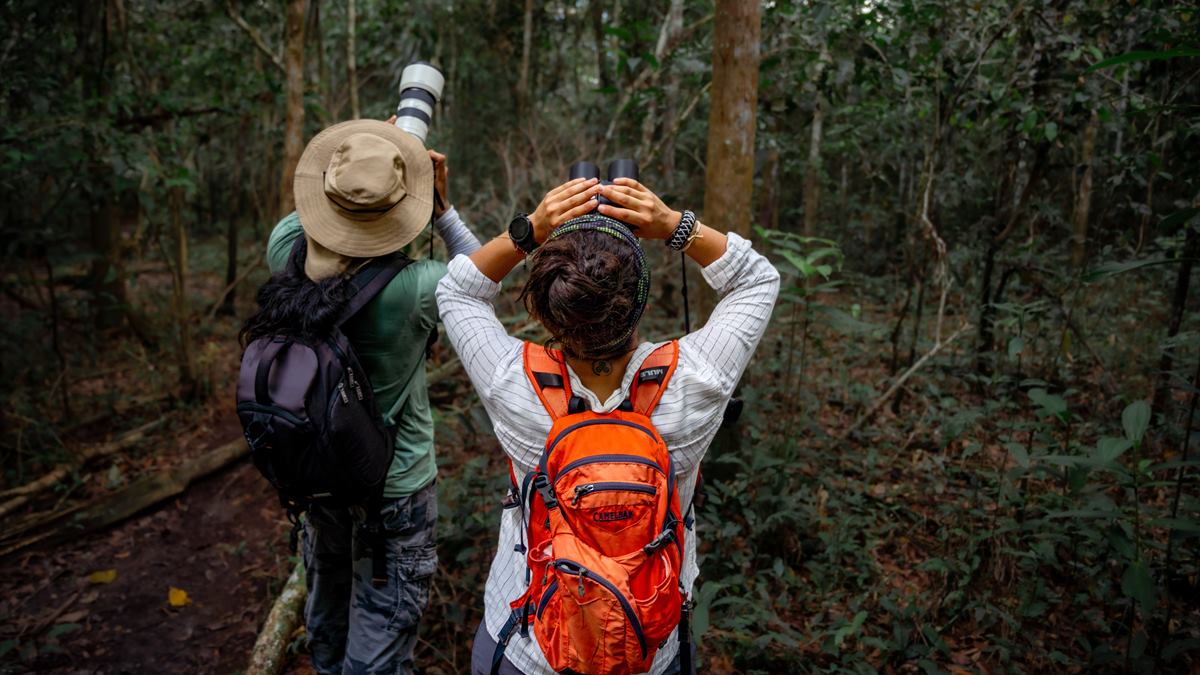
Most packing mistakes for a trip to the Amazon come from the same place: preparing for an imaginary destination. The jungle of the movies, where everything is magical and logistics do not exist. The real jungle of Leticia has paths with roots, mud piers, boats where space is limited and indigenous communities where taxis with trunks do not exist.
Packaging for the Amazon rainforest isn't about bringing too much — it's about bringing the right things.
The Rule That Changes Everything
25 to 30 liter backpack. Without exception.
It is not an aesthetic preference. It is an operational necessity of the Amazon. To get to the river from Leticia you have to walk. To move between piers and communities you have to carry what you carry. To get on and off the boats you have to maneuver.
A suitcase on wheels in that context is an obstacle from the first moment. The 60-liter whitefish generate the same problem — and the Amazonian heat with that weight on top is a combination that many travelers describe as their worst decision of the trip.
For 4 days, the exact amount of clothes:
- 2 long sleeve shirts
- 2 short sleeve shirts
- 2–3 light pants
- 1 short
- Underwear and stockings (4–5 days)
- 1 swimsuit
- 1 thin synthetic layer (for the AC of the boat)
With quick-drying clothing, washing in the accommodation and reusing the next day is completely feasible.
Correct Clothing for the Jungle
Light colors: White, beige, light gray. Dark colors absorb more solar heat and attract more insects.
Quick-drying synthetic fabrics: Nylon, polyester, ripstop. Pure cotton is the worst fabric for the Amazon — it absorbs moisture, takes hours to dry, and with constant 80–100% humidity it can still be damp the next day.
Long sleeve is strategic: Long-sleeved trekking shirts are the smartest piece of luggage. They protect from the sun on boat trips (hours of direct exposure) and from mosquitoes. If the fabric is light, you don't feel warmer than with short sleeves.
Jacket or sweater? You don't need them. The night temperature in Leticia rarely drops below 22°C. A thin synthetic layer is sufficient for air conditioning the boat or accommodation.
Footwear: The Most Expensive Error
This is the point where the most travelers arrive wrong and the most money is lost.
Technical trekking boots are useless in the Amazon. The Amazon mud has a composition and permanent humidity that deteriorates technical materials in a few days — leather, seams, interior lining. Many travelers who arrive with $400,000 COP boots leave with irreparable boots.
Rubber boots are the solution. Totally waterproof, cheap ($25,000–$40,000 COP in any hardware store or store in Leticia), easy to wash with water. And they have an advantage that the trekking ones do not have: the thick rubber rubber is not penetrable by the fangs of most Amazon snakes. Royal protection.
If you don't have them before you travel, buy them in Leticia when you arrive. They are available in all sizes.
Complete with: a light sandal for the hotel, the camp and moving around in Leticia.
Solar Protection and Anti-mosquitoes
Repellent with DEET 30% minimum — the most important item on the entire list.
Not the sunscreen, not the boots, not the flashlight. The repellent. Amazon mosquitoes are more persistent than city mosquitoes and are present in any season — especially at dawn and dusk. Bring at least 2 bottles (spray or cream). Apply before each outside activity and repeat every 4–6 hours.
Sunscreen SPF 50+: The Amazonian sun on boat tours is unforgiving. Apply before going out and repeat every 2 hours. Minimum 2 bottles for 4 days.
Wide-brimmed hat: Not a cap — a hat that also protects the ears, neck and sides of the face. Hours in the boat without side protection have consequences.
UV400 sunglasses: The sun's reflection on the river multiplies UV exposure.
Lip protectant with SPF: Lips burn before any other part. Always forgotten, always necessary.
Rain poncho: In the Amazon it rains approximately one hour a day in any season. The poncho is not for rainy days — it is for that hour that arrives without warning. The type that also covers the backpack is the best.
Essential Technical Equipment
Waterproof dry bags: For phone, camera and documents. The Amazonian humidity (80–100% constant) and the splashes from river routes make any unprotected electronics vulnerable. Inexpensive camping dry bags work perfectly.
Headlamp: The night safari is a must on any quality tour — and is done with a torch in hand. The front frees your hands for photography. Bring extra batteries or rechargeable model.
Minimum Powerbank 10,000 mAh: Electricity in jungle lodges can be hourly or very limited. Energy independence for phone and camera all day.
Binoculars (optional but valued): For bird and wildlife watching in the treetops. The animals of the Amazon don't always come down to your level — many live 20–30 meters high.
Travel Kit for the Amazon
You don't need a complete pharmacy. You do need to cover the most common scenarios:
- Antidiarrheal (Loperamide): Change in water and diet may cause discomfort
- Antihistamine (Loratadine): For reactions to bites or plants
- Analgesic (ibuprofen or paracetamol): Headache, fever
- Oral serum: Rapid rehydration
- Topical antibiotic: Wounds in a humid environment become infected faster
- Bandages and gauze: For cuts on trails
- Personal medications: In sufficient quantity + extra days
Yellow fever: The vaccine is recommended before travel. Important fact: in more than 40 years, no case has been recorded in the Colombian Amazonas department. It is applied as a precaution. Free at the Ministry of Health. Apply 10 days before the trip.
Travel insurance: Colasistencia — works with Hospital San Rafael and ClÃnica Leticia.
Hygiene in the Jungle
All in travel presentations (less than 100 ml):
- Shampoo and soap
- Toothbrush and paste
- Deodorant without intense fragrance (strong odors attract insects)
- Wet wipes (in communities without running water)
- Quick-drying towel — conventional fabric ones take too long to dry in the Amazonian humidity
- Extra toilet paper
- Antibacterial gel
Documents and Money
Valid passport or ID: Essential to cross to Tabatinga (Brazil) or Santa Rosa (Peru). Carry a digital copy on your phone.
Cash in Colombian pesos: The main means of payment in the Amazon. In indigenous communities, piers and local markets, cash is the only means. The ATMs are in Leticia.
Reales and soles (small amount): Useful for the market and local restaurants in Tabatinga and Santa Rosa.
Credit/debit card: For emergencies and accommodation in Leticia.
What You Shouldn't Carry
- Pure cotton clothing — absorbs moisture, takes time to dry
- Technical trekking boots — the Amazon mud ruins them
- Wheel suitcase or large briefcase — impractical on piers and trails
- Valuable jewelry or accessories — without real use and unnecessary risk
- Plants or seeds — prohibited by biosafety and customs
- Strong perfumes — intense odors attract insects
- More than 2 pairs of shoes — rubber boots + sandals are enough
Complete Checklist
✅ Clothing
- [ ] 2 quick-drying long-sleeved shirts, light colors
- [ ] 2 quick-drying short-sleeved shirts
- [ ] 2–3 light pants
- [ ] 1 short
- [ ] Underwear and stockings (4–5 days)
- [ ] 1 swimsuit
- [ ] 1 thin synthetic layer
✅ Footwear
- [ ] Rubber boots
- [ ] 1 light sandal
✅ Protection
- [ ] DEET repellent 30%+ × 2 bottles
- [ ] Sunscreen SPF 50+ × 2 bottles
- [ ] Wide-brimmed hat
- [ ] UV400 sunglasses
- [ ] SPF lip balm
- [ ] Rain poncho
✅ Technical team
- [ ] Waterproof dry bags
- [ ] Headlamp + batteries
- [ ] Powerbank (10,000+ mAh)
- [ ] Binoculars (optional)
✅ Health
- [ ] Antidiarrheal
- [ ] Antihistamine
- [ ] Analgesics
- [ ] Oral serum
- [ ] Topical antibiotic
- [ ] Bandages and gauze
- [ ] Personal medications
- [ ] Active travel insurance
✅ Hygiene (small presentations)
- [ ] Shampoo and soap
- [ ] Toothbrush and toothpaste
- [ ] Deodorant
- [ ] Wet wipes
- [ ] Quick-drying towel
- [ ] Extra toilet paper
- [ ] Antibacterial gel
✅ Documents and money
- [ ] Passport or ID (+ digital copy)
- [ ] Cash in Colombian pesos
- [ ] Credit/debit card
- [ ] Confirmation of tour and accommodation
Frequently Asked Questions
Why are trekking boots useless in the Amazon? Mud and permanent humidity deteriorate technical materials quickly. Rubber boots are totally waterproof, economical, washable and protect from snakes.
Can you buy equipment in Leticia? Yes. Rubber boots, repellent, sunscreen and basic hygiene are available in Leticia. For specific technical and electronic clothing, it is better to bring it from home.
How much clothing for 4 days in the Amazon? 2 long-sleeved shirts + 2 short-sleeved shirts + 2–3 pants is enough with quick-drying clothing.
Is the poncho necessary in the Amazon summer? Yes. In the Amazon it rains one hour a day in any season. The poncho is always mandatory equipment.
Cash or card in the Amazon? Cash in Colombian pesos is the priority. In local communities and markets only cash works.
*For your tour in the Amazon: leticia.travel*
Do you want to experience the Amazon with a clear route?
Write to us on WhatsApp and we will help you choose between a 2, 3 or 4-day tour depending on your flight, season and travel style.