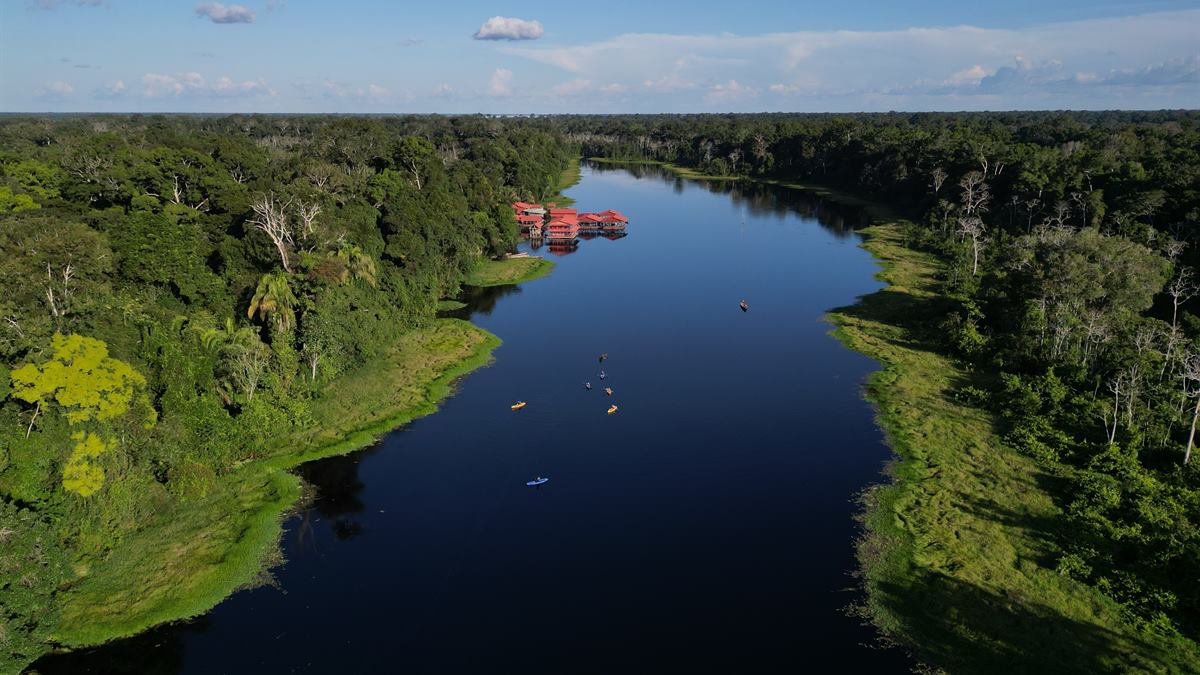
The Colombian Amazon does not have seasons in the conventional sense. There is no calm summer and rainy winter. What there are are two cycles of the river — one in which it falls, one in which it rises — that transform the landscape, the activities available, and the entire trip experience in a way that few people anticipate when they book.
Understanding the seasons of the Colombian Amazon is the difference between arriving prepared and arriving surprised. This guide explains everything to you.
The Amazon River Calendar
The level of the Amazon River in Leticia is determined by rainfall in the Peruvian Andes, not local rainfall. That is the most important fact to understand the seasons.
The annual cycle:
- December: The river begins to rise
- April: Highest point of the year — crescent maximum
- June: The river begins to go down
- September: Lowest point of the year — maximum summer
- November: The river begins to rise again
The difference between April (high peak) and September (low peak) can be up to 8 meters in height in the river. That's not a detail — it's the size of a three-story building.
Summer Season (June–November)
What happens: The river goes down. The low jungle is exposed. The trails dry out. The banks of the river reveal their beaches. Fish and aquatic fauna are concentrated in the main channels.
What's exclusive about this season:
- Natural white sand beaches on the Amazon River (July–November)
- Walking on dry trails
- Most predictable dolphin watching from boat
- Piranha fishing at its best
- Best light for photography
What is not available:
- Kayaking in flooded jungle (requires high water)
- Boat access to certain várzea communities
Ideal profile: First visit, families with children, photographers, travelers who prioritize walks and terrestrial nature.
Winter / Waxing Season (December–May)
What happens: The Andean rains rise the river. The lowland forest is flooded, creating várzeas — unique flooded forests in the world. The dolphins disperse throughout the inland lakes. The Amazon takes on a completely different dimension.
What's exclusive about this season:
- Kayaking in the flooded jungle — the most extraordinary activity in the Colombian Amazon
- Lakes of Tarapoto and Yahuarcaca at their highest level
- Dolphin watching by kayak at close range
- Unrepeatable várzea landscapes
- River tours through canals between trees
What is not available:
- River beaches (they are underwater)
- Swimming on the banks of the river
Ideal profile: Second visit, kayak lovers, travelers who want something different, those who travel in December-May without the possibility of changing dates.
The Rain: The Great Misunderstanding
This is the most common myth about the Amazon seasons and it must be clarified directly: rain is the same in summer and winter.
In Leticia it rains approximately one hour a day throughout the year. This local rainfall is not related to the rise or fall of the river — the river is moved by Andean precipitation. The daily downpour pattern (falls, stops, clears) is constant in any month.
What changes between seasons is the level of the river. Not the amount of rain that is going to fall on you.
The poncho is mandatory equipment in any season — not because it will rain all day, but because that time comes without warning.
Complete Season-by-Season Comparison
| Criteria | Summer (Jun–Nov) | Winter (Dec–May) |
|---|---|---|
| River level | Low — visible beaches | High — flooded jungle |
| Rain daily | ~1 hour/day | ~1 hour/day (same) |
| Temperature | 25–37°C | 25–30°C |
| River beaches | ✅ Jul–Nov | ⌠Under the water |
| Kayak flooded jungle | ⌠Not available | ✅ Feb–May |
| Jungle walks | ✅ Dry trails | ✅ With operator on dry land |
| Dolphin watching | ✅ Concentrates in river | ✅ In inland lakes |
| Photography | ✅ Better light | âš ï¸ More cloudy |
| Mosquitoes | Less | More (in várzeas) |
| Tourists | High in August | Stable flow |
| Recommended days | 4 days | 5–6 days |
Month by Month: What to Expect
December–January: The river rises from low levels. Transition — some summer elements still present. 4–5 days.
February–March: Rising crescent. Kayak in Yahuarcaca and Lagos de Tarapoto available. 5 days.
April: Highest point of the year. Várzea at its best. 5–6 days.
May: The river begins to go down but kayaking is still available. 5 days.
June: Transition to summer. First beaches appearing. 5 days.
July: Consolidated summer. Real beaches, dry trails. 5 days.
August: Peak summer. Maximum beaches, more tourists, more heat. 4 days.
September: Lowest level. Same as August but less people. 4 days.
October: Excellent option — same summer conditions, fewer tourists. 4 days.
November: Transition — beaches still present, river starting to rise. 4–5 days.
The Advantage of Operating in Two Zones
Here is a point that many travelers do not know and that directly affects the quality of the tour depending on the season.
Operators who work exclusively in várzea (flooded forest) areas have clear limitations: in winter, when the water rises, they cannot hike because their trails are under the river. In summer, when the water goes down, they don't have special water activities because their area stays dry.
We operate in two different areas:
Mainland: High jungle that never floods. Hikes available 365 days a year regardless of river level. In the middle of winter with the Amazon at its peak, our travelers walk through dry jungle.
Várzea: Flooded jungle where in winter we kayak among the trees, dolphin watching by kayak and tours through inland canals.
On the same winter day: hike on dry land + kayak in flooded jungle. There is no other operator in the area that can offer this.
Which Season Is It For You?
Choose summer if:
- It's your first time in the Amazon
- You want to walk through the jungle and easily reach the communities
- The river beaches are an experience you are looking for
- You are traveling with children
- Photography with good light is a priority
Choose winter if:
- You already went in summer and want something completely different
- Kayaking in a flooded jungle is the experience you are looking for
- You have dates between December and May
- You prefer the Amazon with less tourist overcrowding
In any season: With us the walks are always available and the activities are complete. leticia.travel
How Many Days in Each Season
Summer: 4 ideal days. 5 in July or November. Winter: 5–6 days to take advantage of kayaking and river tours. Return: Night flight (8–9 pm) in any season to use the last full day.
Frequently Asked Questions
What season is best to visit the Colombian Amazon? It depends on what you want. Summer (June–November): beaches, walks, concentrated fauna — ideal for a first visit. Winter (December–May): kayaking in flooded jungle, unique landscapes — ideal for a second visit or those who have fixed dates during that period.
When is the Amazon River at its highest and lowest? Highest: April (peak winter). Lowest: September (summer peak). The difference can be up to 8 meters.
Is rain different in summer and winter in Leticia? No. The local rainfall pattern in Leticia is the same all year round: approximately one hour a day. The river level is determined by rainfall in the Peruvian Andes, not local rainfall.
Can you kayak in the Amazon in summer? Kayaking in flooded jungle (between trees) is only possible in winter (February–May). In summer kayaking can be done in an open river.
How many days are enough in each season? Summer: 4 days. Winter: 5–6 days to take advantage of kayaking and river tours.
*Which season is yours? leticia.travel*
Do you want to experience the Amazon with a clear route?
Write to us on WhatsApp and we will help you choose between a 2, 3 or 4-day tour depending on your flight, season and travel style.