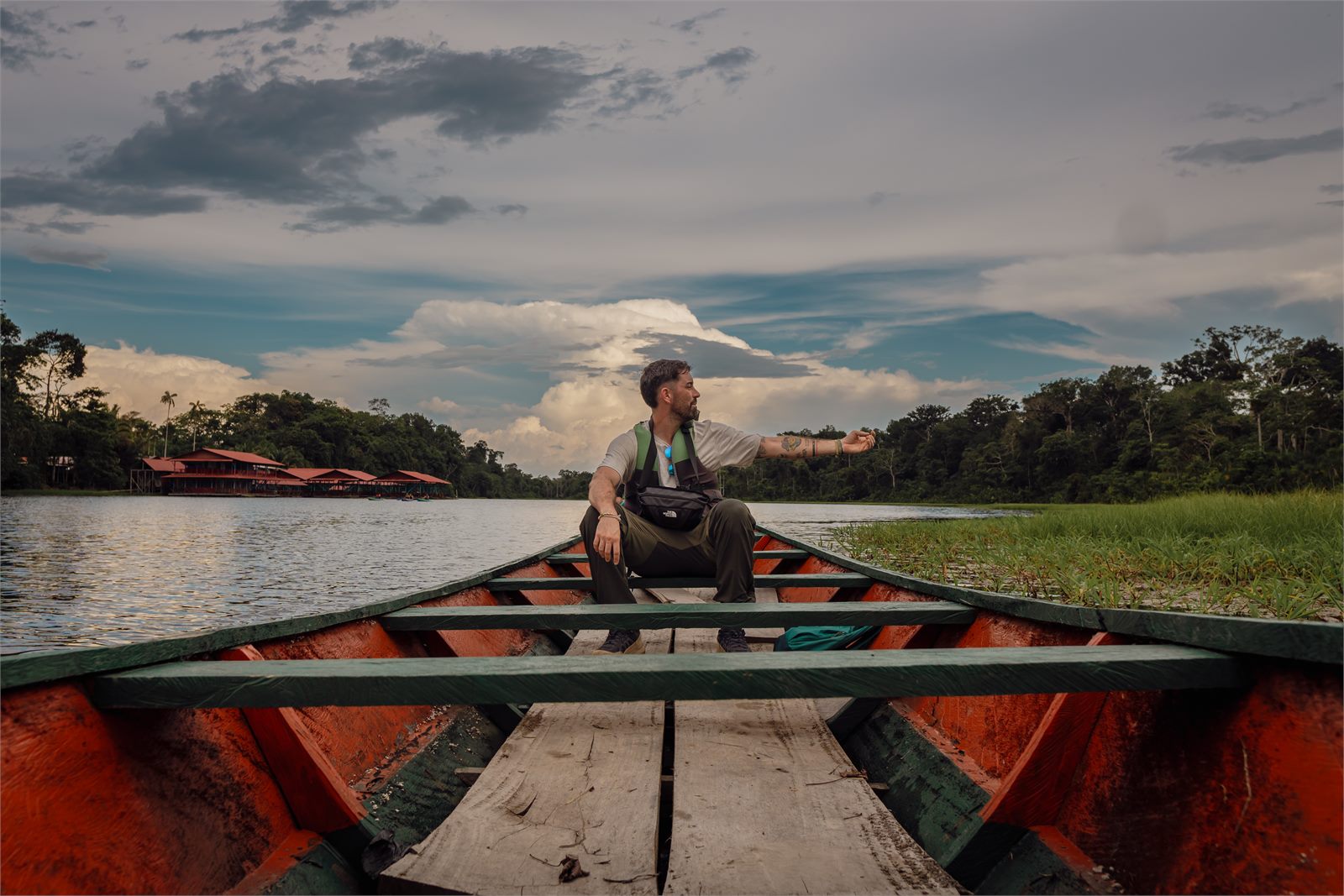
There are two Amazons. The one during the day — with its dolphins, its communities, its river beaches — and the one at night, which very few travelers really know. The night safari in the Amazon is not a secondary activity or an extra on the itinerary. It is, for many travelers, the most memorable moment of the trip.
When the sun goes down over the Amazon River, the jungle does not go out. It transforms. The nocturnal animals come out. The sounds change. The air becomes denser. And you, flashlight in hand, enter an ecosystem that can barely be seen during the day.
This guide tells you exactly what to expect, what you'll see, how to prepare, and why the night safari deserves to be part of your Amazon tour.
Table of Contents
- What is the Night Safari in the Amazon?
- When It's Done: Times and Duration
- What Animals You Can See at Night
- Los Caimanes: The Star of the Night Safari
- The Sounds of the Jungle at Night
- How the Tour Works
- What to Bring for the Night Safari
- Seasonal Night Safari
- Tips to get the most out of it
- Frequently Asked Questions
What is the Night Safari in the Amazon?
The night safari is a guided tour through the Amazon rainforest and river banks after the sun goes down. It is mainly done on foot along jungle trails, by boat along the canals and river banks, or a combination of both.
It is not a conventional night walk. It is a tour with local guides who know exactly where to look for each animal, how to identify the eyes of the alligators by reflecting the flashlight in the water, how to approach without scaring the nocturnal fauna and how to read the jungle in the dark.
The contrast with the day tour is total. The same trails that you walked during the day seeing monkeys and birds, at night have another dimension — quieter, denser, more alive in different ways.
When It's Done: Times and Duration
The night safari typically begins between 7 and 8 pm, when the sun has completely set and the nocturnal wildlife is active. The duration varies between 2 and 3 hours depending on the tour and the group.
On multi-day tours that include an overnight stay in the jungle, the night safari is a central activity on the second or third day. In some full-day tours with late return to Leticia it can also be included.
Total darkness in the Amazon comes quickly — there is no light pollution of any kind within a few kilometers of Leticia. The starry sky over the Amazon jungle, on a clear night, is in itself an experience that justifies going out at night.
What Animals You Can See at Night
The nocturnal jungle has its own list of protagonists, completely different from the fauna you see during the day:
Alligators: The most sought after and the most consistently found. On the banks of rivers and lakes, alligators' eyes reflect the light of the flashlight like small red rubies in the dark water. The guide turns off the boat's engine, the flashlight sweeps the surface and suddenly they appear — sometimes meters from the boat. During the flood season, when high water takes them to flooded areas, the sightings can be especially rich.
Frogs and amphibians: The Amazon has one of the greatest diversities of frogs on the planet. At night, in the heat and humidity, they come out in large numbers. Some are bioluminescent — they glow slightly in the dark. The chorus of frogs that sounds in the jungle at night is one of the most characteristic sounds of the Amazon.
Luminous insects: Fireflies, bioluminescent beetles and other insects that produce their own light. When the guide asks to turn off all the flashlights and wait a few seconds, the light show that appears in the dark jungle is completely unexpected.
Tarantulas and nocturnal spiders: Amazonian tarantulas hunt at night. Experienced guides know where to look for them and how to show them without risk to the group. They are not dangerous if the distance and the guide's instructions are respected.
Snakes: Several species of Amazon snakes are nocturnal. The guide identifies them from a distance and shows them with respect. The anaconda, boa constrictor, and several venomous snakes are most active at night.
Bats: In large numbers on the river and in the jungle clearings. Some specialize in fishing — they fly low over the water and catch small fish with their claws.
Otters: Occasionally visible at night on the banks.
Owls and nocturnal birds: Several species of Amazonian owls and owls active after dark.
Los Caimanes: The Star of the Night Safari
Alligators deserve their own section because they are the animal that generates the most impact on the night safari and the most consistently sighted.
The Colombian Amazon has two main species: the common caiman (Caiman crocodilus) and the black caiman (Melanosuchus niger), the latter larger and rarer to see.
The night sighting technique is fascinating: on the boat, with the engine off and in total silence, the guide points the flashlight at the surface of the water and slowly sweeps the banks. Alligators' eyes reflect light with an unmistakable reddish glow — the pupils have a special coating that acts as a mirror to maximize night vision, making them perfectly visible in the dark.
Sometimes the guide gets close enough so you can see the entire profile of the animal in the water. Other times you only see the eyes — those two red dots at the level of the water — that suddenly disappear beneath the surface. Both experiences have their own magic.
The Sounds of the Jungle at Night
Part of what makes the night safari special is not seen — it is heard.
During the day the jungle has constant background sounds: birds, insects, the river. At night those sounds change completely. Enter the chorus of frogs — dozens of species singing simultaneously at different frequencies, creating a symphony that can be deafening at points. Nocturnal insects add their own layer. Owls mark territory. Night monkeys move among the branches.
And then there are moments of sudden silence — when something big moves in the dark and all the local fauna detect it before humans. These silences have a tension and beauty of their own.
The guide explains during the tour which animal produces each sound. At the end of the night, without having planned it, you end up getting to know the jungle at night by its sounds as much as by its images.
How the Tour Works
The night safari on leticia.travel tours combines two types of tours:
Night boat tour: Slow and silent navigation along the banks of the river or the canals of the jungle. Engine off in the points of greatest concentration of fauna. Search for alligators with a flashlight. Observation of bats over the water. In the Amazon winter, sailing through the channels of the flooded várzea — the night jungle with high water has a completely different atmosphere.
Night walk in the jungle: On dry land trails, with headlamps. Search for frogs, tarantulas, luminous insects. The guide goes ahead, marking the pace and pointing out the fauna. The pace is slow and deliberate.
The combination of the two — boat and hike — in the same night is the most complete version and the one that produces the greatest variety of nocturnal fauna.
What to Bring for the Night Safari
Headlamp — mandatory: The most important item. The headlamp frees your hands for photography and pointing. Bring a good one — not the cheapest hardware store model. Extra batteries or the rechargeable model are important because the safari lasts several hours.
DEET repellent applied before going out: Mosquitoes are most active at dusk and in the early hours of the night. Apply repellent generously before starting the safari and carry the bottle to reapply.
Rubber boots: The same ones you wear during the day. At night the trails have the same risks as during the day — mud, roots, snakes — plus the difficulty of darkness. Rubber boots are the correct protection.
Long-sleeved clothing and long pants: Less exposed surface = less bites. Dark colors are fine at night — sun protection does not apply.
Camera with good low light capability: Photographing nocturnal wildlife requires specific settings. If you have a dedicated camera, check the high ISO and wide aperture settings.
Charged Powerbank: For the rechargeable flashlight if you have it, and for the phone.
Attitude of silence: It is not equipment but it is essential. The night safari requires silence to avoid frightening the wildlife. Groups that talk loudly see much less than those that move silently.
Seasonal Night Safari
In the summer season (June–November): The trails are dry and the boat can move easily along the main channels. The alligators are more concentrated on the edges of the river. Hikes are more comfortable with dry terrain.
In the flood season (December–May): The night boat safari through the flooded jungle is a different experience and in many ways more spectacular. Alligators disperse through flooded areas — harder to find but the encounter, when it occurs in the flooded jungle, is more impressive. The sounds of water between the trees at night are unique.
In both seasons the night safari is possible and extraordinary — just different.
Tips to get the most out of it
Wait for your eyes to adapt: ​​Night vision takes about 15 to 20 minutes to fully adapt to the darkness. The first few minutes of the safari may seem dark and intimidating — that's normal. Then everything changes.
When the guide says silence, total silence: It is not a suggestion. Animals detect sound long before we see them. A silent group sees three times more fauna than one that is talking.
Point the flashlight where the guide tells you: The guide knows exactly where to look. Follow its direction, do not illuminate randomly.
Don't use your phone's flash on animals: Direct flash can frighten and even damage the vision of some animals. Use the guide's flashlight as a light source and photograph without your own flash.
Get dressed before you go out: Don't start applying repellent or putting on your boots when it's time to go out. Have everything ready in advance.
Bring water: The night in the Amazon is still hot and humid. Hydration is not just for the day.
Frequently Asked Questions
Is the night safari in the Amazon dangerous? With certified local guides, no. The guides know exactly how to navigate the jungle at night, where not to put their hands, and how to keep everyone a safe distance from the animals. The risk with a responsible agency is minimal.
What animal is easiest to see on the Amazon night safari? Alligators are the most consistently sighted — their eyes reflect flashlight light from the water and are easy to locate with the right technique. Frogs and luminous insects are also very common sightings.
Do you need your own flashlight or does the tour provide it? Tours include general lighting, but it is always recommended to bring your own headlamp. It gives you independence of movement and improves the experience.
How long does the night safari last? Between 2 and 3 hours typically, depending on the tour and the group. It starts around 7–8 pm.
Is the night safari available all year round? Yes. In any season in the Amazon, the night safari is possible. The experience varies between summer (dry trails) and winter (boat through flooded jungle), but both versions are extraordinary.
Night safari is included in our 3, 4 and 5 day tours. Write to us at [leticia.travel](https://leticia.travel)
Plan your Amazon trip
We help you choose the best combination of days, activities and season based on what you want to experience in Leticia, Puerto Nariño and the triple frontier.